
The Calm Pet Vet

Cat behaviour

Cat behaviour consults

For the cat weeing on the bed, the cat spraying the door frame, the 2 cats quietly making each other miserable, and the cat who has not come out from under it since Tuesday. A long appointment with a vet who can rule out the medical causes first, because in cats they are behind more of this than most people expect.

90 to 120 minutes, from $680. At home across Adelaide and Melbourne, or by video anywhere in Australia.

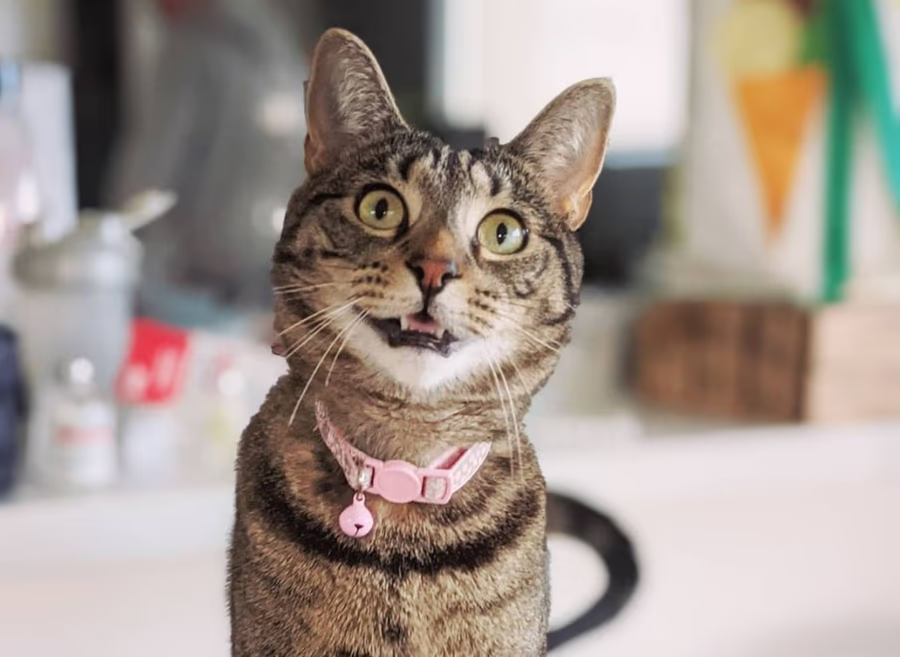
A relaxed tabby cat at home, where cat behaviour consults take place

What we treat

The problems that bring cats to us

Cats hide illness and they hide distress, and both of those get read as a behaviour problem. Here is what each of these usually turns out to be, and what we do about it.

Weeing or soiling outside the litter tray

What it looks like

A puddle on the bed, in the bath, on a pile of clean washing or on the couch. Or faeces neatly beside the tray rather than in it. Often it started suddenly and nothing obvious changed.

This is a medical question until proven otherwise, and that is not a formality. Feline idiopathic cystitis is one of the most common findings in a younger cat who suddenly starts urinating in the wrong place, and it is a stress-linked bladder disease, which makes it medical and behavioural at the same time. Bladder stones, urinary tract infection, chronic kidney disease and diabetes all increase urine volume or urgency. Degenerative joint disease is very common in older cats and badly under-diagnosed, because cats do not limp the way dogs do. A sore cat simply cannot climb into a high-sided tray or get down the stairs to the laundry in time.

So urine and blood testing come before any conclusion about the tray itself. It changes the answer often enough that skipping it is not defensible, and if a cat is in pain when they urinate, they will start avoiding the place where it hurt, which is the tray. Treat the cystitis and leave the learned tray aversion untreated and the problem continues after the cat is well.

Then comes the tray audit, which is unglamorous and frequently the whole fix. Number of trays, where they are, what is in them, how big they are and how they are cleaned. In a multi-cat house, tray avoidance is very often social: one cat sits in a doorway and the other stops going down the hall, and from your point of view nothing at all has happened.

Cleaning matters too. Use an enzymatic cleaner, never an ammonia-based product, because ammonia smells like urine to a cat and marks the spot as an approved toilet.

Being straight with you

House soiling has the highest rate of successful resolution of anything on this page, provided the medical work-up is done properly. It also has one of the highest rates of failure when someone skips straight to the litter advice, which is free everywhere online and is only half the answer.

Spraying and marking

What it looks like

Your cat backs up to a wall, door frame, curtain or new piece of furniture, tail upright and quivering, and leaves a small amount of urine on a vertical surface. The litter tray is still being used normally.

Spraying is communication, not toileting, and separating them is the first thing we do because the treatments have almost nothing in common. A cat who squats and empties their bladder on a horizontal surface has a toileting problem. A cat who stands and marks a vertical surface while still using the tray is telling somebody something.

Usually the message is about territory feeling unsafe or contested. The common triggers are a cat outside the window, a new cat in the neighbourhood, a house move, new furniture or new belongings carrying unfamiliar scent, renovation, a new person or baby in the house, and conflict with a cat already living inside. Desexing status is relevant, but plenty of desexed cats spray, so it is never the whole explanation.

That means the fix is often not aimed at your cat at all. Where an outdoor cat is the trigger, the work is environmental: blocking sightlines at ground level, keeping the resident cat away from the windows the intruder passes, removing whatever is drawing that cat to your property. Indoors, the plan covers how food, water, trays, resting spots and vertical routes are distributed so no cat can control access, plus a proper cleaning protocol and, where the anxiety is generalised rather than situational, medication.

Being straight with you

Spraying can return when circumstances change, and pretending otherwise would be dishonest. So the plan includes what to do the week it comes back, rather than leaving you to start again from scratch.

Tension and aggression between cats in one house

What it looks like

The loud version is screaming and fur on the floor. The far more common version is silent: one cat who no longer comes downstairs, a doorway that is always occupied, long unbroken stares, a cat who only eats at night, a cat who has quietly stopped using the tray.

Cats are not obligately social animals. They form preferred associates by choice, and 2 cats who are not bonded are not failing at friendship, they are being asked to share a territory. For a lot of households, calm coexistence is the correct goal and mutual grooming is not. Owners are often told their cats will work it out. Some do. Some spend years not working it out, very quietly.

The consult maps the house, because that is where the answer usually is. Where each cat sleeps, eats, drinks and toilets, which routes they use, and where the pinch points are: corridors, stairs, a cat flap, the doorway into the kitchen. A cat who blocks a corridor without ever raising a paw causes more chronic stress than a pair who occasionally have a scrap. Vertical space is territory in cat terms, and most houses are badly under-supplied with it.

From there the plan separates resources so no individual can control access to all of any one type, adds routes and elevated resting places, and where a relationship has genuinely broken down, runs a structured reintroduction in stages over weeks using barriers, scent exchange and then controlled visual access. Rushing that stage is the single most common reason a reintroduction fails.

Redirected aggression is worth naming separately, because it looks identical and is not. A cat sees an intruder through the window, cannot reach it, and attacks the nearest housemate. One incident can poison a relationship that was fine the day before. It needs its own plan, and diagnosing it as general dislike wastes months.

Being straight with you

Some pairs of cats do best in a permanently divided house, with separate territories and rotation rather than integration. That is a legitimate, humane outcome and we will say so plainly if it is where the assessment lands.

Hiding from visitors

What it looks like

The doorbell goes and your cat is gone before you reach the door, reappearing 2 hours after everyone has left. Or a well-meaning guest corners them behind the couch and gets swiped.

Hiding is a coping strategy, not a fault. A cat with a good hiding place is a cat who is managing the situation successfully. What concerns us is the cat who has nowhere safe to go, the cat whose hiding has started to expand into normal life, or the cat who is hiding and also eating less, grooming less or toileting differently.

That last combination is a medical flag first and a behaviour question second. Cats hide when they feel unwell, and it is frequently the only sign an owner gets. New hiding in a cat who used to be sociable earns a physical examination and usually bloods, not a behaviour plan.

For genuine visitor fear, the reframe matters: your cat does not need to meet your guests. The best outcome for most cats is not a sociable cat, it is a cat with a genuinely safe, elevated, undisturbed retreat and complete confidence that nobody will come looking for them in it. That means a house rule that nobody extracts the cat from under the bed to show them off, ever.

Where a person is going to be around regularly, a new partner, grandchildren, a cleaner, we build gradual exposure with your cat in control of the distance: guests sitting sideways rather than facing, no direct staring, food and good things appearing when that person is present, and the cat free to leave at any point.

Being straight with you

A cat who watches your dinner party from the top of the wardrobe and comes down when it is over is not a problem to be solved. Success here is often a better hiding place, not a braver cat.

Fear of the carrier and the vet

What it looks like

The carrier comes out of the cupboard and your cat vanishes. 40 minutes of chasing, then a yowling car trip, then a cat who arrives at the clinic already at the top of their stress range and never really gets examined properly.

The carrier is usually the largest fixable piece of the whole problem. Most cats only ever see the carrier immediately before something unpleasant, so it reliably predicts the unpleasant thing. Leaving the carrier out permanently as ordinary furniture, with familiar bedding in it, and feeding your cat in and around it, is genuinely effective and costs nothing but patience.

Which carrier also matters more than people expect. A hard carrier whose top unclips and lifts away lets a cat be examined sitting in the base, in their own bedding, rather than being tipped out or dragged through a small opening. Covering the carrier with a towel during transport, and securing it in the footwell or with a seatbelt so it does not slide, removes a large share of the travel stress on its own.

A home visit removes the car and the waiting room entirely, which for most cats is where the majority of the fear lives. Beyond that, we work with consent-based handling and pause when your cat tells us to, rather than escalating to scruffing or towel restraint. Every appointment that ends in force confirms the fear for the next one, and cats have long memories for it.

Pre-visit medication given a couple of hours before an appointment is frequently part of the plan, and it is not a failure. Keeping a calm cat calm is much easier than settling a cat who is already in a panic, and the point is for the visit to be forgettable.

Being straight with you

Some things need a clinic. Dentistry, surgery, imaging and hospitalisation cannot happen on your kitchen bench. The aim is not permanent avoidance, it is a calm, planned route back to the clinic while your cat is well and there is no time pressure, done with your regular clinic rather than around them.

Try this first

The litter tray audit

We are publishing this because it is genuinely useful and because you should not have to pay $680 to be told your tray is too small. Work through it before you book. If it fixes the problem, wonderful. If it does not, the medical work-up is the next step and you have already ruled out the easy answers.

What a good setup looks like

  • One tray per cat plus one spare, in different parts of the house rather than lined up in a row
  • Away from the washing machine, the dog's bed, the food bowls and any busy corridor
  • A tray about 1.5 times your cat's length from nose to tail base, which is larger than most trays sold in shops
  • Fine, unscented, sand-like clumping litter, deep enough for your cat to dig properly
  • No hood and no liner unless you know your particular cat prefers them
  • Scooped at least daily, washed with unscented detergent, never with anything ammonia-based
  • A tray area with 2 exits, so one cat cannot corner another at it

One caveat worth stating plainly: if your cat is straining, passing small amounts frequently, crying in the tray or producing blood, that is an emergency in male cats in particular. Ring your nearest vet or emergency centre now rather than working through this list.

Pricing

What it costs, before you ring

Published up front. Travel, prescriptions, medications and pathology are quoted separately, and we would rather give you a tailored estimate for your cat's exact situation.

Behaviour Counselling

In-depth behaviour consultations (Adelaide & Melbourne).

  • Extended Initial Consult90-120 minfrom $680
  • Revisit30-45 minfrom $330
  • Fear Free Training30-45 minfrom $330

All consults are Fear Free and inclusive of GST. Out-of-hours appointments, travel, prescriptions, medications and pathology testing are quoted separately. We prefer to give you a tailored estimate for your pet's exact circumstances. Travel is charged from $135.

Questions

Cat behaviour questions

Tell us about your cat

Describe what is happening, where in the house it happens and when it started. We will tell you honestly whether a behaviour consult is the right next step, what it involves and what it costs.