
Adelaide & South Australia only
Fear Free vet care,at home in Adelaide
Vaccinations, skin and ear consults and pathology in your own lounge room, from a vet who is Elite Fear Free Certified and a Fear Free Coach. Your pet is examined at the pace they can actually cope with, and they are allowed to say no.
In-home GP care is currently available in Adelaide and South Australia only.
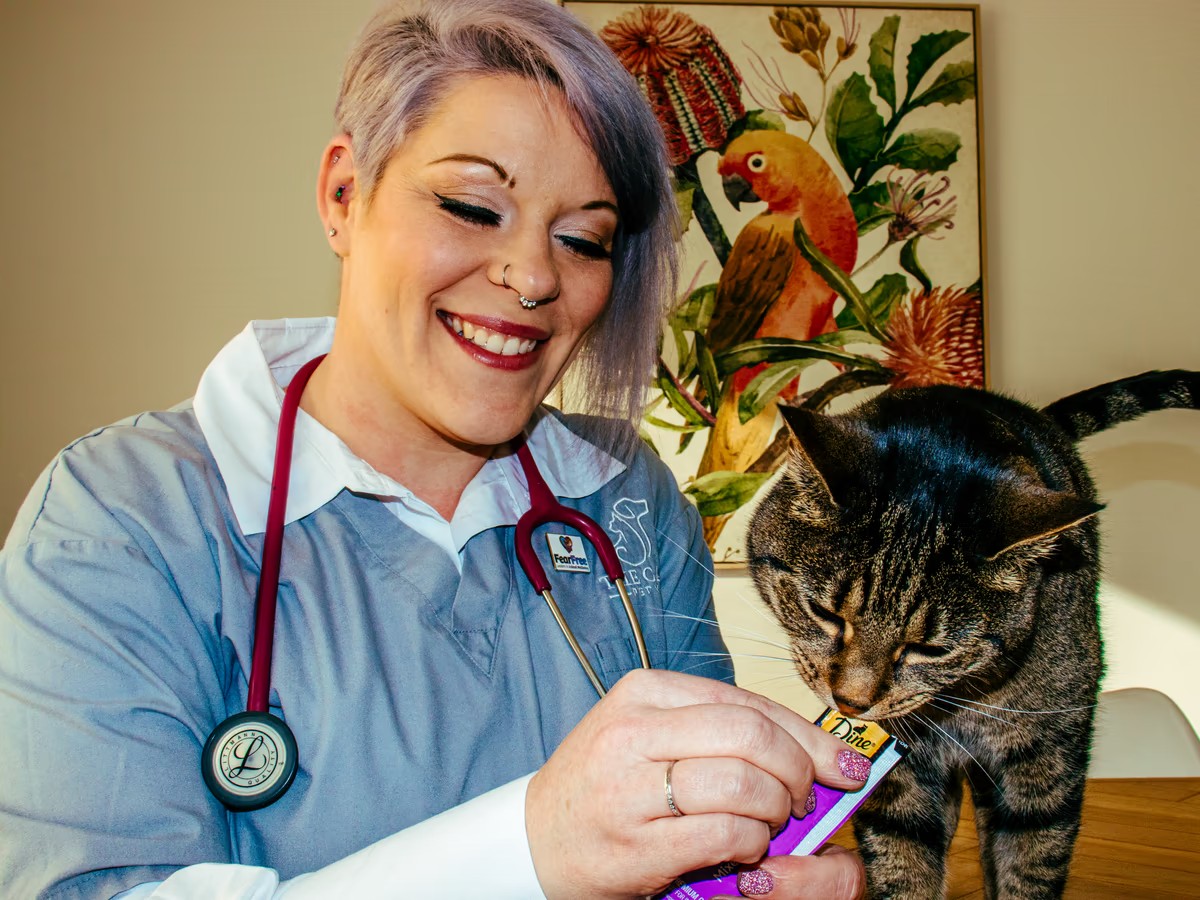

Elite Certified, and a Coach
Elite is the highest Fear Free certification tier. Being a Coach means Dr Channy also trains other veterinary teams in these methods, which is a different thing again from having sat the course.
What it actually means
Fear Free is a method, not a mood
Every practice says it is gentle. Gentle is a feeling. Fear Free is a set of decisions you can watch us make, and the honest test is whether we are willing to leave a visit unfinished.
The whole approach rests on one idea: a pet learns something at every veterinary visit, and what they learn is either that this is survivable or that it is not. Get it wrong at 12 weeks old and you spend the next 12 years paying for it. Most of what we do is protecting that lesson.
A home visit, in order
- 1
We arrive and do nothing
No hands on your pet, no bag opened, no talking directly at them. We sit down, talk to you, and let your dog or cat come and investigate us in their own time. For a wary pet this part can take 10 or 15 minutes, and it is the most valuable part of the visit.
- 2
We use food as a measurement, not a bribe
A pet who happily takes a treat is coping. A pet who turns their head away from chicken they would normally mug you for has told us they are past their limit. That refusal is diagnostic information, and it changes what we do next.
- 3
We start where your pet is comfortable
If a dog is fine with a shoulder scratch but tightens when we reach for an ear, we work along that gradient rather than through it. Most of an examination can be done from the angle a pet is already relaxed about, and the rest can usually wait for another day.
- 4
Your pet is allowed to say no
Cooperative care means teaching a pet a way to opt in, such as resting their chin in your hand, and honouring it when they move away. If a pet withdraws, we stop. Nothing is held down while it struggles.
- 5
We stop when your pet says stop
Sometimes that means a vaccination waits until the next visit. One vaccine is never worth teaching a dog that this is a place where they get pinned. The next visit is easier because of what we did not do in this one.
Read your own pet
What fear, anxiety and stress look like
You will notice this before we do, because you know your pet. Most owners can name the loud signs and miss the quiet ones, and the quiet ones come first.
A lip-lick, a yawn when nobody is tired, a hard stare with the whites of the eyes showing, or a dog who simply goes still: those are early requests to back off. Growling is not the start of the conversation. It is what happens after the polite signals have been ignored several times. A pet who has been punished for growling has not stopped being afraid, they have just stopped warning you.
- Barking, growling or other vocalising
- Trying to bite or scratch
- Trying to escape or get away
- Soiling themselves or the carrier
- Hiding
- Shaking or trembling
- Stiff, tense muscles
- Dilated pupils
- Heavy panting
- Whale eye (whites of the eyes showing)
- Freezing in place
- Tense face, lip-licking or yawning
If you are seeing several of these at every vet visit, that is worth acting on rather than pushing through. Tell us which ones you see and when, because it tells us where to start.
In-home GP care
What we can do in your lounge room
This is general practice veterinary care, delivered at home across Adelaide and South Australia. Not a triage service, and not a replacement for a hospital when your pet needs one.
Vaccinations and health checks
Annual and puppy or kitten vaccinations, a full nose-to-tail examination, weight and body-condition assessment, and parasite prevention, done on the lounge-room floor rather than a steel table.
Skin and ear consults
Itchy dogs and sore ears are the most common reason people call us. We examine the ear canal, take swabs and skin samples on the spot, and look at them under a microscope so treatment is based on what is actually growing there.
Pathology at home
Blood collection, urinalysis and cytology, all taken in your home and sent to a commercial veterinary laboratory. We call you with the results and explain what they mean, rather than leaving you to decode a printout.
Senior and quality-of-life checks
Older pets are the ones a car trip punishes most, and the ones who need reviewing most often. Arthritis assessment, blood pressure conversations, pain scoring and honest quality-of-life discussion, at home where you can see how they really move.
Cooperative care plans
A written, staged plan for the pet who genuinely will need a clinic one day. Booked as a Fear Free training session and built around what your pet finds hard, not a generic handout.
Second opinions and follow-up
If your pet has a diagnosis and you want it talked through without a queue behind you, a home consult gives you the time to actually ask your questions.
For when a clinic is unavoidable
Cooperative care plans
Some things genuinely cannot happen at home. A dental, a surgery, an ultrasound. The question is not whether your pet will ever go back to a clinic, it is whether they arrive there already terrified.
A cooperative care plan is training that starts while your pet is well and nothing is urgent. That is the only time it works. Trying to build a dog's tolerance for handling in the week before a general anaesthetic is too late, and everyone involved can feel it.
We look at what your pet specifically finds hard, break it into pieces they can already manage, and give you a written plan with short daily reps you can actually keep up. Muzzle conditioning done properly, so a muzzle predicts cheese rather than restraint. Carrier training that starts with the carrier simply existing in the room. Practice car trips that end somewhere good. Happy visits to the clinic where nothing medical happens at all.
We will not promise you a dog who loves the vet. Anyone promising to fix your pet is selling bull-dust. What we can do is make the next unavoidable visit measurably less frightening than the last one.
What a home visit cannot do
Being straight with you about this is part of the service. These need a clinic or a hospital:
- General anaesthesia, surgery and dental procedures
- X-rays and most diagnostic imaging
- Hospitalisation and multi-day intravenous fluids
- Emergency and critical care
If your pet is in trouble right now, please go straight to your nearest emergency veterinary hospital. Home visits are booked in advance and are not the right route for a crisis.
Pricing
What an in-home consult costs
Published, because almost nobody else in this market publishes theirs. A Fear Free home visit costs more than a standard clinic consult, and the reason is simple: it is longer, and it comes to you.
Veterinary Consult
Mobile GP veterinary care (Adelaide / SA).
- Extended Initial Consult45-60 minfrom $440
- Revisit - Complex30-45 minfrom $330
- Revisit - Simple15-30 minfrom $225
All consults are Fear Free and inclusive of GST. Out-of-hours appointments, travel, prescriptions, medications and pathology testing are quoted separately. We prefer to give you a tailored estimate for your pet's exact circumstances. Travel is charged from $135.
Cooperative care and Fear Free training sessions are booked under behaviour counselling. Travel is charged from $135 depending on where you are in South Australia. We are a GapOnly clinic and we accept VetPay payment plans, and we would always rather give you a tailored estimate for your pet than have you guess from a table.
Questions
Fear Free vet care, answered
Fear Free is a certification program for veterinary professionals built around reducing a pet's fear, anxiety and stress during care, rather than treating distress as an unavoidable cost of medicine. Dr Channy holds Elite certification, the highest tier, and is also a Fear Free Coach, which means they train other veterinary teams in these methods. It is a practical qualification, not a philosophy: it changes handling, appointment length, medication choices and when we stop.
No. Treats are one small part of it. The substantive differences are appointment length, the order things happen in, handling that never restrains a struggling animal, pre-visit medication where it is warranted, and a willingness to end a visit incomplete. A clinic can be kind and still be working inside a 15 minute slot that makes most of that impossible.
Pre-visit medication is used when a pet's fear would otherwise make care unsafe or would teach them that veterinary handling is frightening. It is prescribed for the pet's benefit, discussed with you beforehand, and it is far easier to keep a calm pet calm than to settle one already in a panic. If a pet does not need it, we do not use it.
If your pet genuinely enjoys the clinic, keep going there. A mobile Fear Free service is worth the extra cost when the trip itself is the problem: the pet who shakes in the car, the cat who cannot be got into the carrier, the dog who has started growling at the nurse, or the senior who finds the journey painful.
Yes, and it is worth telling us at the time of booking rather than at the door. Knowing in advance means we plan the visit properly, arrange pre-visit medication if it is needed, and set expectations about what we will attempt on the first appointment. Nobody is judging you for it.
Tell us what your pet finds hard
The more you tell us up front, the better we can plan the visit. Send an enquiry with what happens at the vet, what you have already tried, and what you are worried about. We read every enquiry ourselves, usually within a week, often with questions of our own.
In-home veterinary care is available in Adelaide and South Australia only.