
The Calm Pet Vet

Behaviour medicine

Veterinary behaviour medicine for dogs and cats

Behaviour medicine treats how your pet feels, not just what they do. It is a branch of veterinary medicine, which means the work starts with ruling out pain and disease and ends with a written treatment plan you can actually follow.

Initial consults run 90 to 120 minutes from $680. In person across Adelaide and Melbourne, and by video anywhere in Australia.

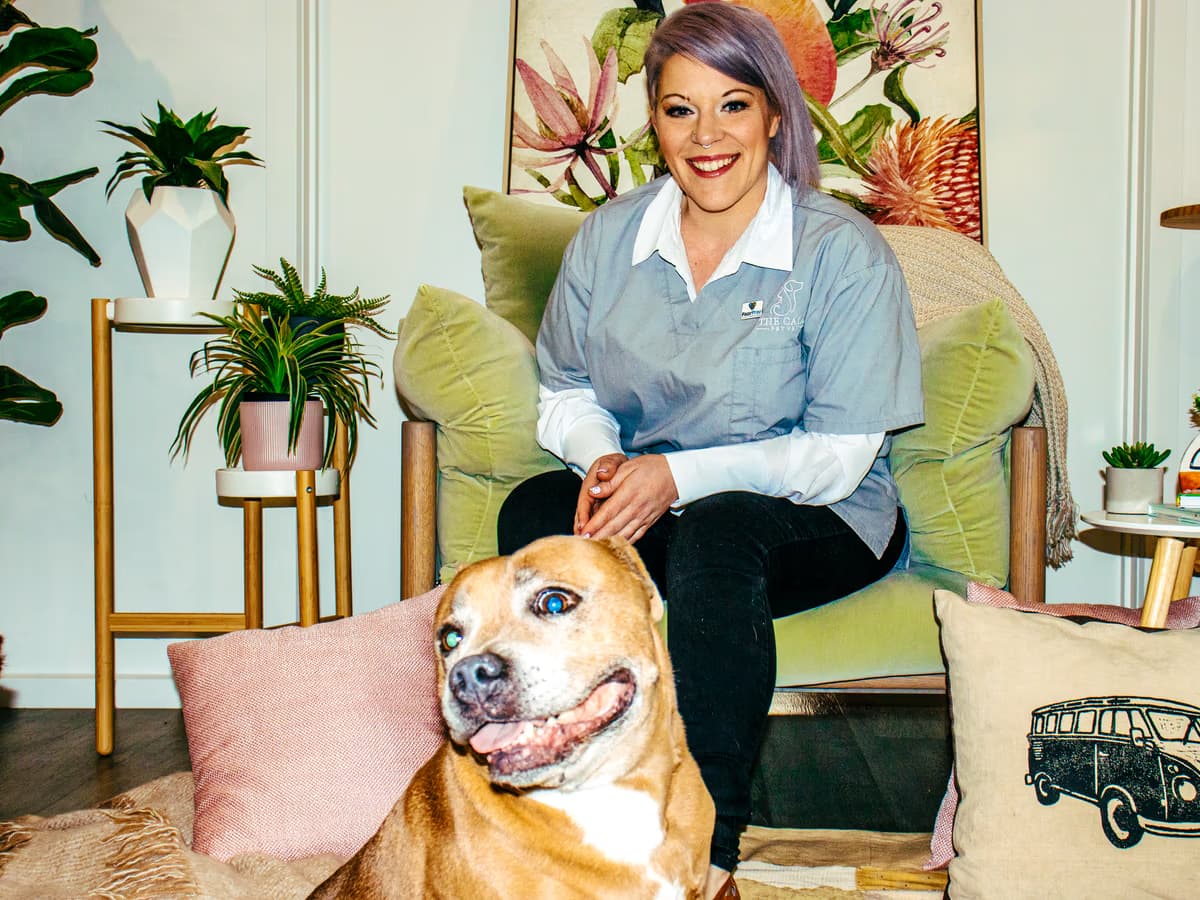
Dr Chantelle McGowan with a relaxed dog during a behaviour consultation

Every consult produces 4 things

  • A diagnosisIn plain English, with the reasoning shown.
  • A management planWhat changes in the house today, before any training starts.
  • A behaviour modification planWhat you teach, in what order, and how to tell it is working.
  • A decision about medicationWhether it helps, which one, why, and how we monitor it.

The definition

Behaviour is a clinical sign

When a dog lunges at another dog on the footpath, or a cat wees on the bed, that behaviour is the visible end of something internal. Fear, pain, frustration, an underlying illness, or a pattern the animal learned because one of those was true at the time.

Veterinary behaviour medicine is the branch of veterinary science concerned with working out which of those is driving it, and treating that. Not suppressing the sign. Treating what produced it.

This matters practically, not philosophically. A behaviour that has a medical driver will not respond to training, and every week spent training it is a week the animal spends in pain or in fear.

A common question

How this differs from dog training

Not a rivalry. We work with good force-free trainers constantly and refer to them often. But the 2 jobs are genuinely different, and choosing the wrong one costs you months.

Comparison of dog training and veterinary behaviour medicine
CapabilityA good trainerVeterinary behaviour medicine
Focus of the workTeaching skills and changing what the animal doesDiagnosing and treating why the animal feels that way
Can examine your pet and assess painNoYes
Can order blood tests, urine tests and imagingNoYes
Can diagnose a medical or behavioural conditionNoYes
Can prescribe and monitor medicationNoYes
Registered and regulatedDog training is not a regulated occupation in AustraliaRegistered with the veterinary board, bound by its code of conduct
Best used forSkills, manners, weekly coaching and practice between reviewsFear, anxiety, aggression, compulsive behaviour and any behaviour change with a possible medical cause

The short version: if the question is "how do I teach this", a trainer is the right call. If the question is "why has my pet started doing this", or the behaviour involves fear, panic, aggression or a change you cannot explain, it belongs with a vet first.

Why a vet

Only a vet can rule out the medical causes

This is the part of behaviour work that cannot be delegated. Every consult here starts with a medical review, because these are not rare edge cases. They walk in the door most weeks.

The dog who suddenly snaps when touched

Orthopaedic and spinal pain sits underneath a large share of what gets described as sudden aggression. Hip and elbow arthritis, cruciate disease and lumbosacral pain all make being lifted, brushed, hugged or bumped genuinely unpleasant. Train the growl away without treating the pain and you have a painful dog who has learned not to warn you first. That is more dangerous, not less.

The cat weeing outside the tray

Feline idiopathic cystitis, bladder stones, urinary tract infection, kidney disease, diabetes and hyperthyroidism all present to owners as a litter tray problem. So does arthritis, because a sore cat cannot climb into a high-sided tray. Urine and blood testing comes before any conclusion about the litter tray itself, and it changes the answer often enough that skipping it is not defensible.

The older pet whose behaviour changed

A dog who becomes clingy, restless at night or newly distressed when left alone at 10 or 11 years old is a different case to the same signs at 2. Canine cognitive dysfunction, failing vision or hearing, high blood pressure and pain that disturbs sleep all change how an older animal copes. Age is a reason to look harder, not a reason to accept it.

The itchy, unsettled, short-tempered pet

Atopic dermatitis, ear disease and gastrointestinal disease all raise arousal, wreck sleep and shorten a pet's fuse, and none of them are obvious across a video call unless someone is looking for them. Chronic discomfort and chronic anxiety feed each other, which is why we treat the physical side properly rather than layering behaviour work on top of it.

Where the history points at a physical cause, we recommend or arrange the work-up before calling anything behavioural: blood and urine testing, a structured pain trial, imaging, or a review with your regular vet. Sometimes the whole answer is medical. More often it is one layer of several, and treating it is what makes the behaviour plan work at all.

What actually happens

From enquiry to written plan

Most practices will not tell you this before you pay. Here is the whole sequence, including the parts that are work for you.

  1. 1

    Before we meet: history and video

    You complete a detailed intake questionnaire covering your pet's life from the start, the household, routine, diet, sleep, previous training and what changed and when. It takes most people 30 to 45 minutes and it is worth every one of them. We also ask for short videos of the behaviour as it really happens, filmed safely and from a distance. We never ask you to provoke it.

  2. 2

    The consult: 90 to 120 minutes

    In person at home across Adelaide and Melbourne, or by video anywhere in Australia. We take a full history, watch your pet be themselves, and where it is safe and we are in the room, examine them. We do not trigger the behaviour to see it. Watching a fearful animal be frightened teaches us nothing we cannot learn from a good history and a video.

  3. 3

    The written plan

    After the consult you receive a written report: the diagnosis in plain English, the safety and management changes to make immediately, a step-by-step behaviour modification plan in the order it should be taught, and, where it is indicated, the medication with its dose, expected onset, side effects and monitoring. A copy goes to your regular vet with your permission.

  4. 4

    Review and adjust

    Revisits run 30 to 45 minutes from $330. Most cases need at least 1 or 2 in the first 3 months, and medication cases need scheduled monitoring. Plans get adjusted, because the first plan is a hypothesis and your pet is the one who tells us whether it was right.

Straight talk

What we will never promise you

The behaviour industry runs on promises, because frightened owners buy them. This is what you get here instead.

  • We will not guarantee an outcome. Anyone promising to fix your dog is selling bull-dust, and the promise usually costs you more than the consult did.
  • Some behaviour is managed rather than cured. A dog with a genuine fear of strangers may always need a plan for visitors, and a plan that works is a good result.
  • Progress is counted in months. If someone tells you a single session resolves aggression or separation distress, ask them what happens in week 6.
  • Medication is not a shortcut and it is not a failure. It is one tool, used when the emotional baseline is too high for learning to happen at all.
  • Where a case needs a registered veterinary specialist, we will say so and refer, rather than keeping the case because we can.
  • Where the honest conversation is about safety in the household or quality of life for the animal, we will have that conversation with you rather than around it.

Qualifications, plainly

What MANZCVS (Behaviour) is, and what it is not

Dr Channy (Dr Chantelle McGowan, she/they) has been a registered veterinarian since 2011 and holds BVSc, MANZCVS (Behaviour), Elite Fear Free Certified Professional & Coach. The behaviour membership was awarded in 2023 after college examination.

Membership of the Australian and New Zealand College of Veterinary Scientists is earned by examination, but it is not a specialist qualification. Australia has only a handful of registered veterinary behaviour specialists. Where a case needs one, we will say so and refer.

We publish this because the pet behaviour industry is not regulated and the titles are a mess. You are entitled to know exactly what the letters after a name mean before you spend $680.

Where we work

  • Behaviour consults: Adelaide, Melbourne, and Australia-wide by telehealth.
  • In-home GP vet care: Adelaide and South Australia only.

Melbourne behaviour work runs on scheduled in-person visits, so dates are limited. If the timing does not suit, a telehealth consult is the same appointment by video.

Pricing

What a behaviour consult costs

Published, because you should not have to ring 3 practices to find out. None of our named competitors publish theirs.

Behaviour Counselling

In-depth behaviour consultations (Adelaide & Melbourne).

  • Extended Initial Consult90-120 minfrom $680
  • Revisit30-45 minfrom $330
  • Fear Free Training30-45 minfrom $330

All consults are Fear Free and inclusive of GST. Out-of-hours appointments, travel, prescriptions, medications and pathology testing are quoted separately. We prefer to give you a tailored estimate for your pet's exact circumstances. Travel is charged from $135.

Questions

Behaviour consult questions

Tell us what is happening at home

Describe your pet and what is worrying you. We will tell you honestly whether a behaviour consult is the right next step, what it would involve, and what it would cost, before you commit to anything.